Scar Camouflage
What to expect from Scar Camouflage
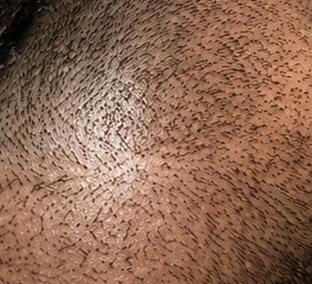
Hair transplant surgery, particularly older FUT (strip) procedures, often leaves a visible linear scar at the back of the scalp. For many clients, this scar limits how short they can comfortably cut their hair. SMP can reduce the contrast between the scar tissue and the surrounding scalp so the mark becomes far less noticeable, even at shorter hair lengths.
FUE (follicular unit extraction) procedures can leave small circular dot scars across the donor area. While these are generally less visible than FUT scars, they can still show when the hair is kept very short. SMP impressions placed within and around these dots help them disappear into the overall appearance of the scalp.
Beyond transplant scars, SMP can also be used on scalp marks from injury, surgery or conditions such as traction alopecia. Each case is assessed individually, as scar tissue behaves differently from normal skin and requires a careful, adapted approach to achieve a good result.
The camouflage is not about making the scar invisible in every circumstance — it is about reducing it to the point where it no longer draws the eye or limits how you wear your hair. Most clients find the difference significant enough to restore their confidence in keeping their hair short.
A consultation is the starting point for all scar camouflage work. Your practitioner will assess the scar, discuss realistic outcomes and explain the likely number of sessions required based on the size, depth and colour of the mark.
Frequently asked questions
Can SMP fully hide a transplant scar?
SMP significantly reduces the visibility of transplant scars but may not make them completely invisible in all conditions. The goal is to soften the contrast so the scar no longer draws attention.
Does scar tissue take pigment differently?
Yes. Scar tissue is denser and can be less receptive to pigment than normal skin. This is why scar camouflage sometimes requires additional sessions to build the result.
Can SMP cover both FUT and FUE scars?
Yes. SMP is effective on both types of transplant scarring. The approach is adapted depending on the shape and extent of the scarring.
How soon after transplant surgery can I have scar SMP?
We recommend waiting at least 12 months after your transplant surgery before having scar camouflage SMP, to allow the scar to fully mature.